A Tax Strategy More Real Estate Investors Should Know About
For some high-income earners, a short-term rental can be more than an income-producing property. Under the right circumstances, it may also create a tax opportunity worth understanding before you invest.
When most people start looking at investment real estate, they focus on the obvious numbers.
What does the property cost? What could it generate in rental income? What are the expenses? What’s the potential return?
Those questions matter. But there’s another part of the equation that I’ve been talking about more and more with investors lately: how the property may affect your overall tax picture.
There’s a strategy involving short-term rentals that has gotten a lot of attention among physicians, executives, business owners and other high-income earners.
You may have heard it called the “short-term rental tax loophole.”
I don’t love the word loophole, because this isn’t some trick buried in the tax code. It’s a legitimate strategy built around how certain short-term rental activities are classified, how actively the owner participates and how depreciation is handled.
And while it certainly isn’t right for everyone, I think it’s worth knowing about if investment real estate is already on your radar.
Why short-term rentals can be different
Rental real estate is generally treated as a passive activity for federal income tax purposes.
But there are exceptions. Under current IRS rules, an activity isn’t treated as a rental activity under the passive-activity rules when the average period of customer use is seven days or less. From there, the owner’s participation in the activity becomes another important piece of determining how income and losses may be treated.
That distinction alone doesn’t magically create a tax deduction.
How the property operates, how involved you are and your own tax situation all matter.
In other words: owning a short-term rental isn’t enough.
But when the requirements are met, the tax treatment can look very different from that of a traditional passive rental. That’s why this strategy tends to get the attention of people with significant W-2 or business income.
Then there’s depreciation.
This is where the strategy gets another layer.
Real estate investors can generally depreciate qualifying portions of an investment property over time. A cost-segregation study takes a closer look at the property and separates certain components into shorter depreciation schedules.
Instead of treating every depreciable dollar the same way, qualifying assets may be depreciated much faster.
Current federal law also restored a 100% special depreciation allowance for certain qualified property acquired and placed in service after January 19, 2025. Not every dollar spent on real estate qualifies — land, for example, isn’t depreciable, and the building itself is generally treated differently — but eligible components identified through cost segregation may qualify for accelerated depreciation.
Combine that with the short-term rental rules and material participation, and you can start to understand why some high-income investors are paying attention.
But here’s the part I wouldn’t overlook.
The tax strategy should make a good investment more interesting. It shouldn’t make a bad investment look good.
I’m still going to start with the fundamentals.
Is there real demand?
Does the location make sense?
What does the competitive rental market look like?
What will the property cost to operate?
Does it offer something guests will actually choose over the competition?
And do the numbers make sense without relying entirely on a tax benefit?
That’s where the real estate conversation and the tax conversation need to work together.
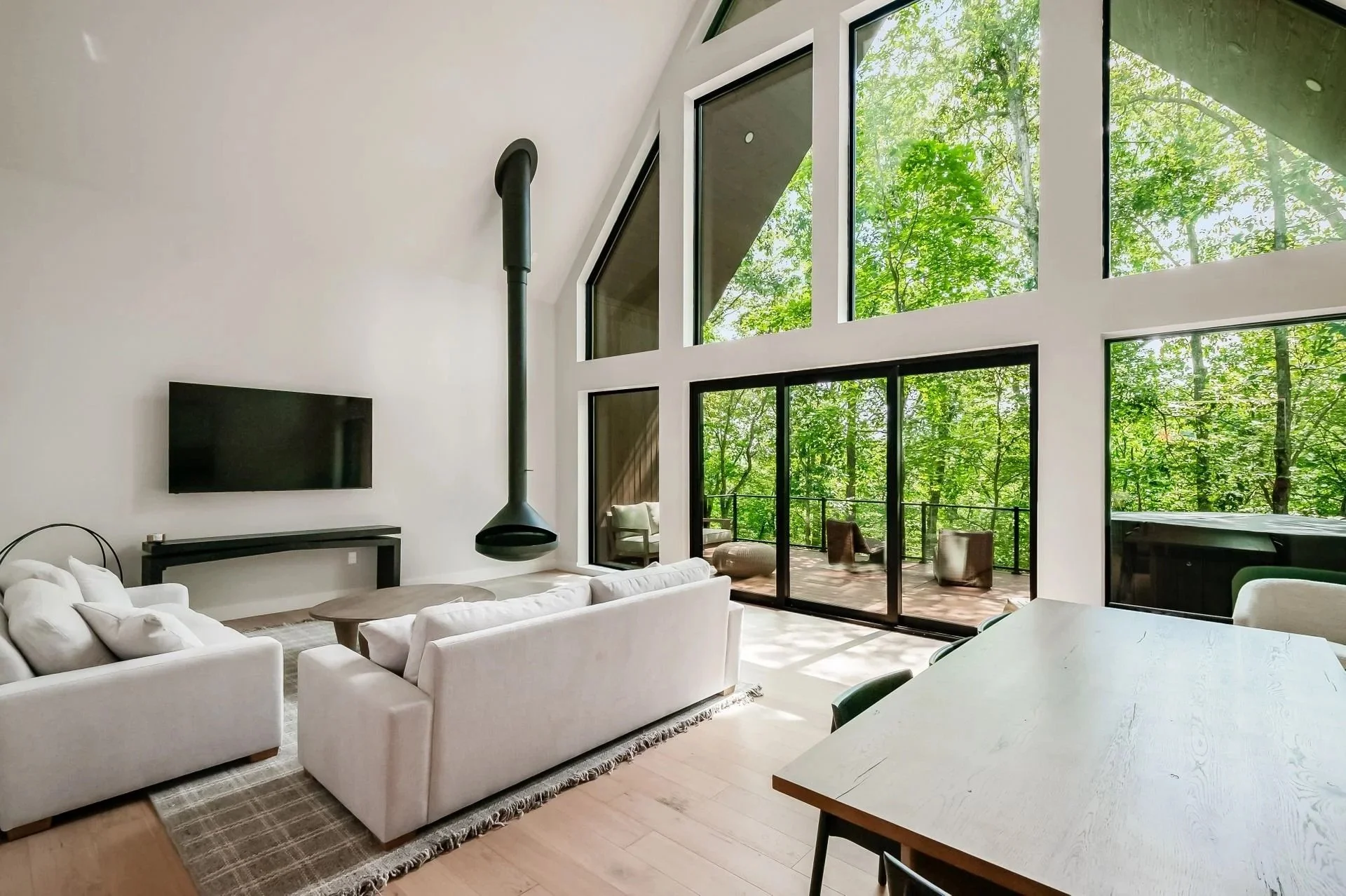
Arcadia Hills is a good example of what that can look like.
This is where the strategy becomes a little less theoretical.
Arcadia Hills is currently being offered as an investment opportunity in the Hocking Hills market. Set across more than 100 contiguous wooded acres, the property includes six newly built, fully furnished luxury cabins purpose-built for short-term rental use. The cabins range from intimate one-bedroom retreats to larger accommodations designed for groups of up to 14.
But what makes the property particularly interesting from an investment perspective is that you aren’t simply buying six individual cabins.
You’re acquiring an operating hospitality property with existing infrastructure, an internal road system, established utilities and room to continue growing. Additional cabins and a clubhouse are also planned to be constructed as part of the sale, creating another layer of future revenue and development potential.
And because the existing cabins were newly constructed and furnished specifically for short-term rental use, Arcadia Hills is the kind of property where an investor may want to bring a CPA and cost-segregation specialist into the conversation early.
Not because I can tell you what the tax benefit will be. I can’t.
But because there are a lot of moving pieces here — real estate, furnishings, site improvements, existing operations and future construction — that make it worth understanding how the acquisition could fit into your broader tax and investment strategy.
That’s the point of knowing this strategy exists. It changes some of the questions you ask before you buy.
Arcadia Hills at a glance:
$9,600,000 asking price
101.58 contiguous acres
6 completed luxury short-term rental cabins
Additional cabins + clubhouse construction included
Existing infrastructure + future development sites
Established short-term rental operation

Start the tax conversation before you buy.
This is probably the most important point I can make.
If this strategy interests you, don’t wait until after you’ve purchased a property to talk with your CPA.
There are a lot of variables involved — your income, the way you use the property, ownership structure, your level of participation, depreciation and other tax limitations can all affect the outcome.
I’m not a tax professional, and I’m never going to pretend to be one.
What I can do is help you evaluate the real estate side of the equation: identify opportunities, understand the market, dig into the property and give you and your advisors the information you need to make an informed decision.
Sometimes knowing which questions to ask before you invest can be every bit as valuable as finding the property itself.

Considering an investment property?
Whether you’re looking at a single short-term rental or an opportunity on the scale of Arcadia Hills, it’s worth looking beyond the obvious numbers. If Hocking Hills or another investment property is on your radar, let’s talk about what you’re trying to accomplish and the opportunities currently available.
The Mancini Group
mandy@themancinigroupsells.com
614-796-5077
This content is provided for general educational purposes only and is not tax, legal or financial advice. Tax treatment depends on individual circumstances and applicable law. Consult a qualified CPA, tax advisor and/or attorney before making investment or tax decisions.