How a $2.5M buyer inquiry became a $9.6M portfolio acquisition
Adamina Canyon is a luxury short-term rental development located in the heart of Hocking Hills—one of the Midwest’s most sought-after outdoor tourism destinations and a market that continues to attract serious investment attention.
Purpose-built as a high-end retreat, the development consists of eight luxury cabins designed to deliver a private, elevated guest experience while operating together as a single, professionally managed portfolio. From the beginning, Adamina Canyon was never positioned as a collection of individual vacation homes. It was conceived as an income-producing hospitality asset—a scalable operating business secured by real estate.
That distinction matters. Hocking Hills draws strong, year-round demand from a drive-to audience spanning multiple major metro areas, while thoughtfully developed luxury rental inventory remains limited. Adamina Canyon was created to meet that demand head-on, pairing premium design with operational efficiency and brand-level positioning inside one unified asset.
Which is why this story isn’t about selling a cabin.
It’s about how a strategically built luxury rental development evolved from a $2.5M inquiry into a $9.6M portfolio acquisition—without the buyer ever stepping foot on the property.
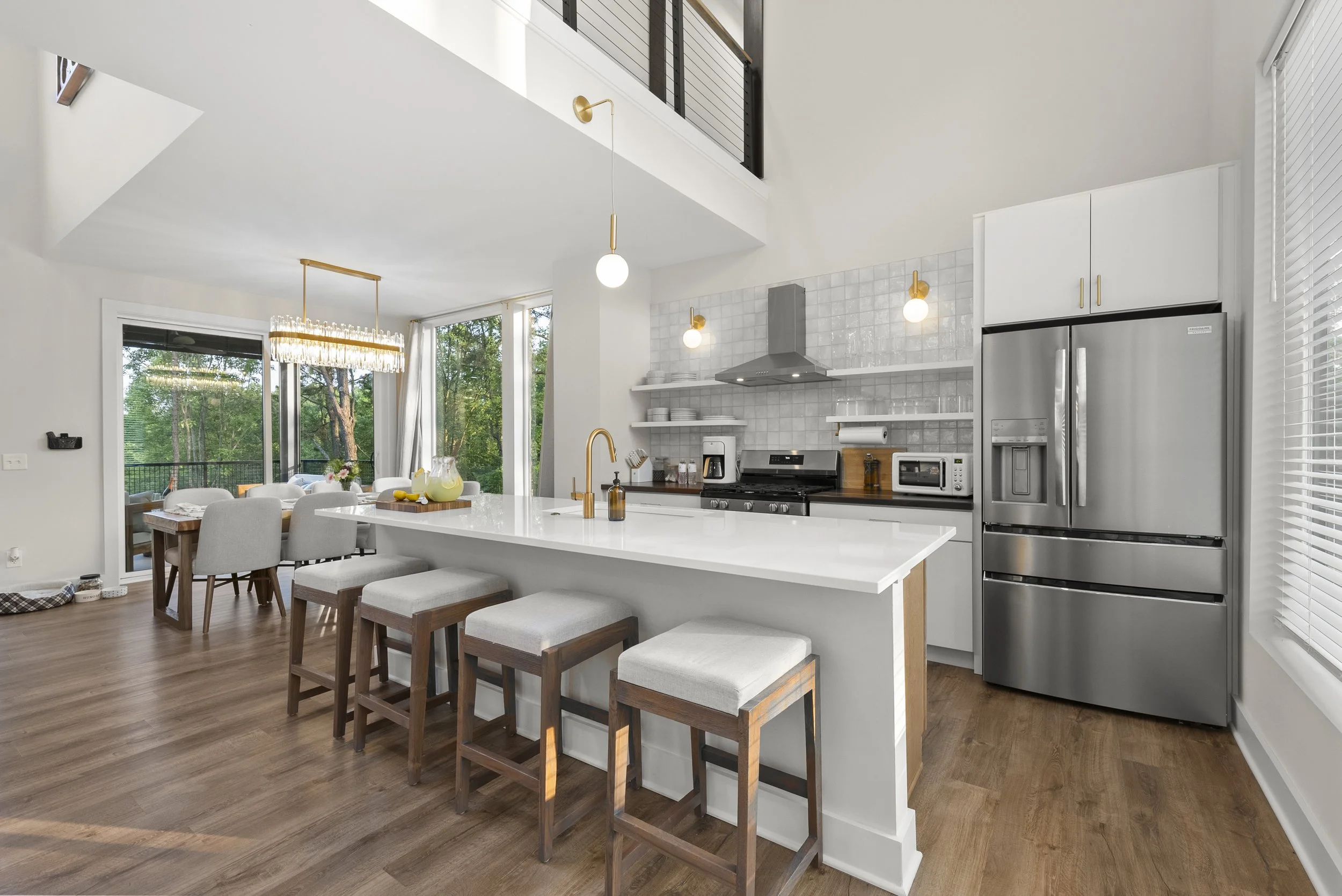
The buyer never saw the property.
How a $2.5M inquiry became a $9.6M portfolio acquisition
Some of the most sophisticated real estate deals don’t begin with a showing. They begin with a question.
In this case, the buyer didn’t ask for photos. He didn’t request a virtual tour or ask when he could fly in to walk the property. He didn’t lead with finishes, views, or design details.
He asked about opportunity.
That single question set off a series of conversations that ultimately turned an initial $2.5M inquiry into a $9.6M portfolio acquisition at Adamina Canyon, a luxury short-term rental development in Hocking Hills.
What makes the deal even more notable is this: the buyer never saw the property in person. He had never been to Ohio. He hadn’t even heard of Hocking Hills before that first call.
And yet, this became one of the most strategic transactions we’ve closed.
An inquiry that didn’t look like a “typical buyer”
From the very first conversation, it was clear this wasn’t a traditional buyer scenario.
The discussion wasn’t about views, finishes, or how the cabins photographed. It was about structure. The buyer opened by asking about acquiring two units, packaged around $2.5M, and immediately outlined a nontraditional approach involving creative financing, strategic leverage, and long-term scalability.
For many agents, that would have been the end of the conversation.
Deals that don’t fit neatly into conventional frameworks are often dismissed as too complicated or unlikely to close. But experienced investors don’t operate inside traditional boxes, and neither do the opportunities that allow them to scale.
Instead of shutting the idea down, I listened.
That choice changed the trajectory of the entire deal.
How serious investors actually evaluate opportunities
Sophisticated investors don’t lead with emotion. They don’t ask whether a property is staged or whether they can see it this weekend. Their questions are fundamentally different.
They want to know whether the structure works, whether the numbers support the strategy, and whether there is room to grow beyond the initial acquisition. They lead with math, risk assessment, and vision—not showings.
From the outset, it was clear this buyer wasn’t looking for a “pretty cabin.” He was evaluating whether Adamina Canyon could function as a high-performing operating business secured by real estate.
Once we aligned on that premise, the conversation shifted immediately.

From cabins to a business model
At this level, short-term rental transactions stop resembling residential real estate and start looking much more like business acquisitions.
So the focus moved away from aesthetics and into performance. We began reviewing historical and projected revenue, occupancy trends, seasonality curves, online visibility, booking demand, and the operational systems supporting the property. We looked closely at staffing stability, operational efficiency, and how the development was positioned within the broader Hocking Hills market.
The question wasn’t whether the cabins photographed well.
It was whether the operation was durable, defensible, and capable of scaling.
That’s where Adamina Canyon distinguished itself.
Why Hocking Hills works at a portfolio level
For buyers outside the Midwest, Hocking Hills often flies under the radar. For informed investors, it’s one of the most compelling short-term rental markets in the region.
The fundamentals are strong. Tourism demand remains consistent throughout the year, supported by a drive-to audience from multiple major metro areas. Nightly rates are attractive relative to acquisition and development costs, and the region has avoided the level of overdevelopment seen in many coastal vacation markets. At the same time, national awareness of Hocking Hills as a luxury retreat destination continues to grow.
When viewed through a portfolio lens, Hocking Hills isn’t just a vacation destination. It’s a scalable revenue environment.
Once the buyer fully understood the depth of the market and Adamina Canyon’s positioning within it, the conversation evolved.
The question was no longer whether it made sense to acquire two units.
It became whether it made sense to acquire the entire operation.
The inflection point: from two units to eight
With the right data on the table, the math became clear.
Individually, the units performed well. Together, they performed exceptionally.
When we modeled the acquisition as a full eight-unit portfolio, the value proposition strengthened dramatically. Centralized operations improved efficiency. Shared branding and marketing increased visibility. A unified online presence created leverage that individual units simply couldn’t achieve on their own. Most importantly, the portfolio structure offered stronger long-term exit options.
The whole was worth significantly more than the sum of its parts.
That’s the power of strategic aggregation—and that’s the moment the deal transformed.
And just like like, two units became eight. $2.5M became $9.6M.
Not because of pressure or persuasion, but because the numbers, structure, and vision aligned.
No tour required.
Here’s the part that surprises most people.
The buyer never toured Adamina Canyon.
There were no flights, no in-person walkthroughs, no on-site visits.
At this level, tours are optional. Understanding is essential.
When investors acquire short-term rental portfolios, they aren’t buying countertops or finishes. They’re buying proven demand, operational systems, revenue stability, market positioning, and scalable infrastructure. The real asset lives in performance data, booking history, and long-term projections—not just on the ground.
Why most agents miss deals like this
This transaction didn’t succeed because it was easy. It succeeded because it was understood.
Most agents are trained to sell homes by highlighting features, pushing showings, and anchoring value to comparable sales. But selling high-performing short-term rental portfolios requires a different skill set entirely.
It demands comfort with creative deal structures, fluency in operational metrics, and a business-first mindset. More than anything, it requires the ability to recognize opportunity where others see complexity.
Without that perspective, deals like this rarely make it past the first call.
The real lesson from Adamina Canyon
This wasn’t about upselling a buyer or pushing a larger deal.
It was about recognizing who was on the other end of the phone and meeting them at their level.
Some inquiries aren’t asking whether a property is nice.
They’re asking whether it’s the right platform for growth.
When you understand that distinction, everything changes.

Who this case study is for?
This story is for portfolio builders, experienced short-term rental investors, creative financing strategists, and developers or owners planning an exit.
If that’s you, you don’t need someone who simply sells property. You need a strategic partner who understands how real estate, operations, and opportunity intersect—and who can translate vision into execution.
Because at the highest levels of short-term rental investing, the most powerful deals don’t look traditional.
And neither do the buyers who close them.
The Mancini Group
mandy@themancinigroupsells.com
614-796-5077